Introducing Henschke
Established in 1868, Henschke is one of Australia’s oldest family-owned wineries, with vineyards in the Eden Valley, Barossa Valley and Adelaide Hills. Henschke’s wines are recognised throughout Australia and the world as some of the best, with a focus on ultra-premium, single-vineyard wines.
The Henschke family have always had a strong commitment to sustainability that stems from their desire to ensure the created environment sits in a healthy balance with the natural landscape, to regenerate vineyard ecosystems, and to minimise harmful impacts to the earth by reducing carbon emissions.
Henschke operations use electrical, diesel and gas equipment, and also have sustainability impacts from vineyard practices, water use, waste management, procurement and product shipping.
The Project
Tandem Energy has a long history of working with Henschke, beginning with an energy audit in 2018.
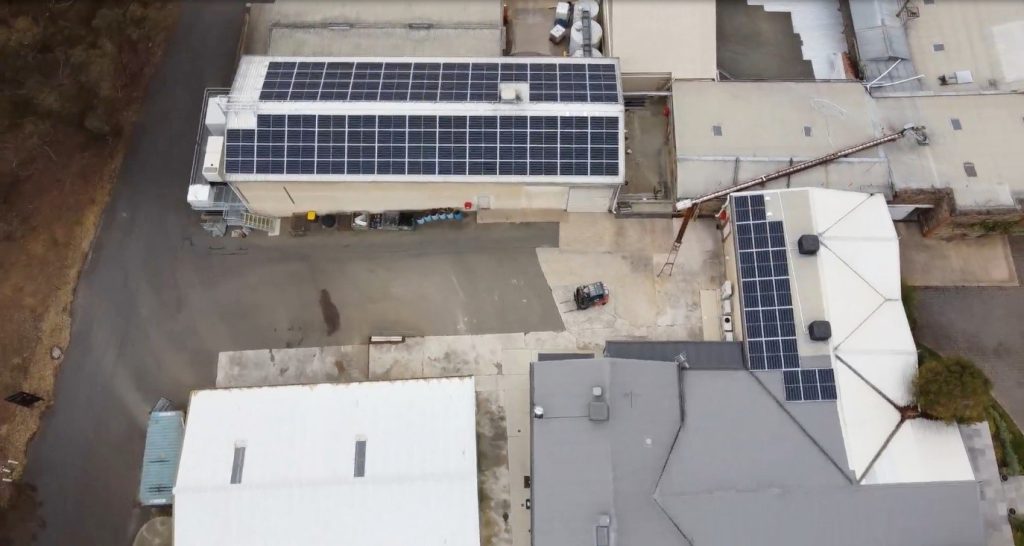
Tandem designed and managed the installation of one of the first Australian winery solar and battery microgrids at Henschke in 2021, providing energy security and reducing carbon emissions.
In 2024 Henschke became an applicant member of International Wineries for Climate Action (IWCA) and engaged Tandem Energy again to develop an Emissions Reduction Roadmap to help them achieve their net zero targets as required for IWCA membership.
We used our Net Zero Navigator framework to develop the Emissions Reduction Roadmap, undertaking a comprehensive analysis of Henschke’s emissions sources and identifying emission reduction opportunities through a series of site visits and stakeholder workshops. The opportunities were modelled and compared using a marginal abatement cost curve, and roadmap scenarios were generated. To kickstart emissions reduction, Tandem provided a 2-year action plan outlining the next steps and identifying potential roadblocks and catalysts required for success.
Opportunities
This project identified multiple opportunities for Henschke to reduce their emissions, including:
- Practical opportunities such as electrification projects, procurement policy changes and refinement of agricultural practices.
- Catalysts for change including governance and leadership recommendations and organisational culture changes.
Challenges
The main challenge in developing the Emissions Reduction Roadmap lay in the initial data quality. In the process of this project we supported Henschke to improve the accuracy and availability of the data required for their emissions inventory. For Henschke the biggest challenge in implementing the Emissions Reduction Roadmap will be technical and financial barriers, especially in the electrification of agricultural equipment.
Outcomes
Tandem Energy has provided Henschke with a tailored emissions reduction roadmap including high level cost-benefit analysis and scenario planning, as well as a two-year action plan as a starting point towards achieving their goal of net zero by 2040. This roadmap allows Henschke to consider and compare the impact and cost effectiveness of multiple emission reduction opportunities allowing effective strategic planning towards net zero, and setting of interim targets.
Next steps
Tandem continues to work with Henschke to implement the 2-year action plan provided as part of this project. The majority of these actions focus on policy development and staff education and engagement, as well as further information collection and detailed feasibility assessments.
Good news
The main aim of this project is emissions reduction, however achieving this goal has the potential to provide additional benefits. Electrification and renewable energy investments will improve energy security. Staff education and engagement workshops are expected to foster a culture of sustainability that spreads outside of Henschke and into the wider community. By setting ambitious but well planned and achievable emission reduction targets Henschke will continue to grow their sustainability leadership and be positioned as an industry leader in climate action.